T-Drill

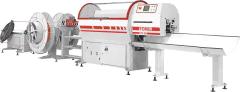
T-DRILL OCC-115 Cutting & Chamfering Machine

Orbital tube cutting and chamfering with a stationary workpiece. Review tube dimensions, end preparation and feeding for your Malaysian production enquiry.

Back to Chipless Cutting ->
T-DRILL OCC-115 Cutting & Chamfering Machine
T-DrillOCC-115

Product Overview

The T-DRILL OCC-115 cuts and chamfers tubes while the tube remains stationary and the cutting tools rotate. Its lathe-style cutting process produces a continuous chip; it is a different process from the chipless TCC systems listed in this catalogue.

For a Malaysian fabrication enquiry, identify the required cut length and finished edges as well as the tube diameter. The selected inserts, clamping and feeding arrangement need to match the material, wall thickness and downstream welding or assembly requirement.

Key Specifications

Process
Orbital cutting and chamfering; continuous-chip cutting
Cutting OD range in brochure
6–114.3 mm; capacity conditions apply
Cutting/chamfering OD range
10–114.3 mm; tool and application dependent
Wall thickness in brochure
1–6 mm; minimum depends on tube diameter
Material examples
Aluminium, copper, CuNi, steel and stainless steel
Tube movement
Stationary tube with rotating tools

Stationary tube, rotating cutting tools

Keeping the tube stationary changes how the workpiece is handled during cutting. The brochure describes a gripping arrangement and distributed cutting forces intended to preserve tube geometry. This is relevant when reviewing components that should not be spun during the cutting operation.

  • State whether the workpiece is straight, bent or otherwise irregular.
  • Identify the tube surface and any marking or handling restrictions.
  • Show the cut position and the finished component dimensions.

Specify the cut and each required edge

OCC-115 can combine cutting with internal and external chamfering on both pipe ends within the work cycle. The actual edge preparation depends on the selected tooling and component requirement. A cut-only enquiry and a cutting/chamfering enquiry therefore need different scope descriptions.

Provide the required chamfer geometry, edge condition and cut-length tolerance. These details are more useful for selecting inserts and setup than a general request for a weld-ready end.

Separate cutting capacity from chamfering capacity

The brochure gives a cutting range beginning at 6 mm OD and a combined cutting/chamfering range beginning at 10 mm OD, both up to 114.3 mm. It also states that the minimum wall thickness depends on tube diameter.

Use the range for the actual operation, together with material and thickness. If a project includes several tube sizes, identify which need cutting only and which require edge preparation.

Plan feeding, chip handling and output

This machine produces a continuous chip, rather than the chipless result of a TCC cutter. The production setup should address tube clamping, feeding, coolant and chip handling alongside the required cut quality.

The brochure gives production-rate examples that depend on cut length, material and quality. For a Malaysian production line, submit your own cut-length schedule and output target. Include how finished components will be collected and passed to welding or assembly.

Prepare an OCC-115 quotation enquiry

Send Logamweld the material specification, tube sizes and a drawing of the finished ends. Add stock lengths, cut quantities, the intended Malaysian factory location and the available working area.

Use WhatsApp, email or phone according to your purchasing process. Ask the Shah Alam team to confirm the proposed inserts, clamps, feeding/outfeed arrangements and other equipment included in the quotation.

Questions before you choose OCC-115

Is OCC-115 a chipless cutting machine?

It uses a lathe-style process that produces a continuous chip. TCC rotary chipless cutting is a different process, so compare the methods against the required end condition and component.

Does the smallest cutting diameter also apply to cutting with chamfering?

The brochure lists different minimum diameters for those operations. Use the correct cutting-only or cutting/chamfering range and confirm the material, wall thickness and tooling.