Decide which manufacturing problem the system must solve
A customised enquiry should explain the required result before specifying individual machine names. It may concern a special operation on one component, several linked processes or a wider production cell. The manufacturer can draw on established technologies, but the proposed combination depends on the actual requirement.
- Identify the current bottleneck or operation to be added.
- Show the finished component and the condition of incoming material.
- State which existing machines or processes must remain in use.
Describe the complete sequence and its interfaces
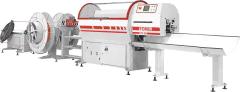
The brochure gives examples of T-DRILL processes integrated with bending, marking, robots and handling systems. A project brief should distinguish the operations needed inside the proposed scope from upstream and downstream equipment supplied separately.
For an existing line, identify loading points, part transfer and the control interfaces that need discussion. This avoids treating a collection of compatible machine names as a fully defined production system.
Define the component family and the output requirement
Provide representative drawings and the full size/material range. List the changes between products, including tube geometry, outlet layout, end shapes and joint preparation. A system for one repeat part has different flexibility requirements from a family with frequent changeovers.
State the intended output, batch quantities and available operating time. Include the quality and inspection requirements so any proposed production target can be reviewed against the component and acceptance criteria.
Include Malaysian factory constraints in the brief
For a local installation enquiry, supply a layout showing available floor space, access and the direction of material flow. Identify electrical, compressed-air and other utility provisions as applicable to the proposed processes. Include the expected operator and handling arrangement.
Where the system will connect to existing controls or reporting, describe that requirement and who is responsible for the interface. These details help establish the project boundary before a concept is treated as a complete commercial scope.
Turn the project brief into a quotation discussion
Submit the component drawings, production brief and factory information through your preferred Logamweld contact channel. Include the Malaysian site, target timing and the technical or purchasing contact for follow-up.
Ask the Shah Alam team how the proposed technical review and quotation will address tooling, integration, trials, factory/site acceptance and any requested training or support. Those items should be defined for the project rather than assumed from a general capability description.
Questions before you choose Customized Solutions
Can a custom system be selected from a fixed capacity table?
Its capacity and configuration are defined around the proposed processes and component family. Drawings, materials, output and factory constraints are needed before a meaningful technical concept can be reviewed.
What should the first project submission contain?
Include representative finished-part drawings, raw-material details, production quantities, quality requirements and a factory layout. Identify existing equipment and the operations you want included in the proposed scope.